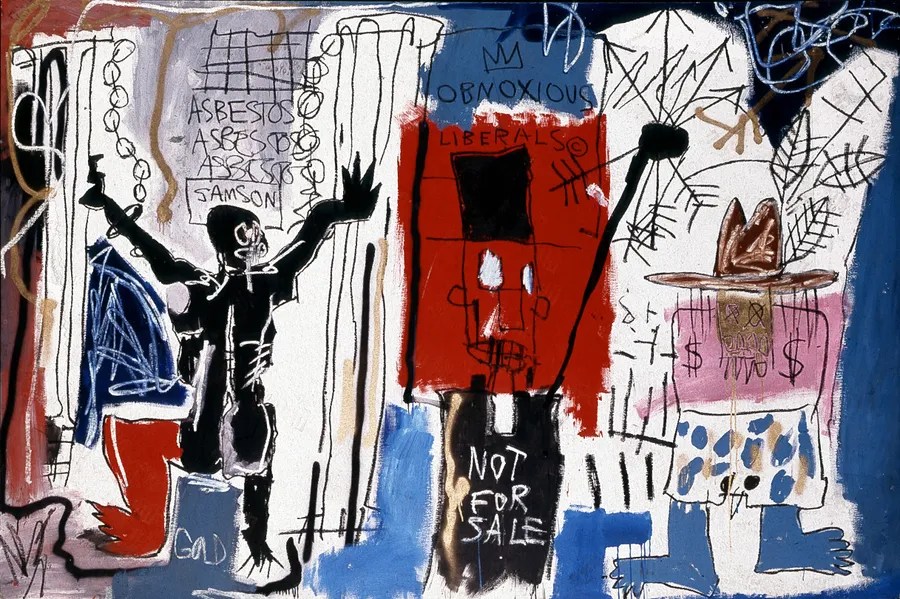
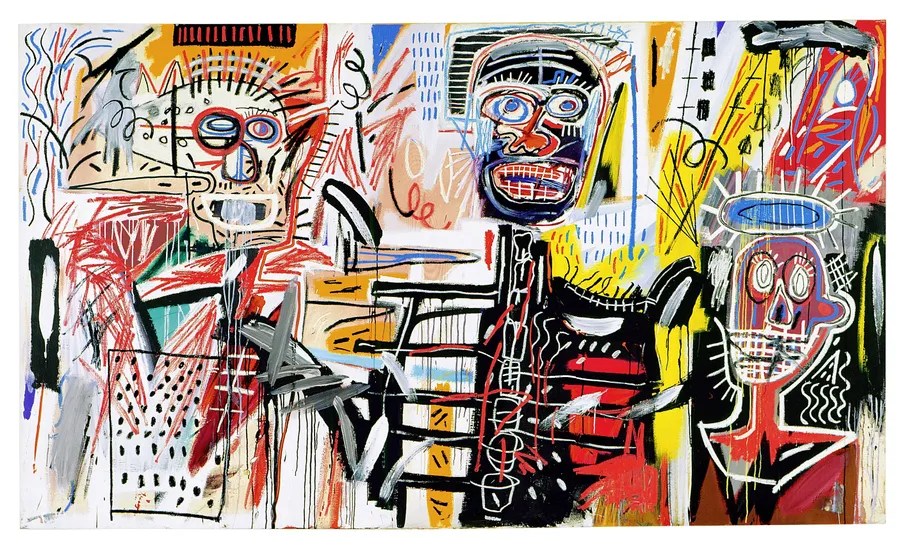
I went to the MOCO Museum in Amsterdam this October and got to see my first Basquiat in person. The series included about five paintings. Seeing Basquiat up close is the only way you should see his work. You don’t really get the experience through a phone screen; it’s like trying to hear every note in jazz while wearing a pair of Delta headphones.
What makes it so much more powerful in person is that you can truly see the pressure of the lines carved into the canvas—the frantic scribbling, as if his heart might stop if he doesn’t keep drawing. You can actually feel his intensity and energy through the art, which leaves you feeling genuinely stressed, maybe even anxious. That emotional weight is fully captured within the canvases themselves.
You may hate it—my friend did—not enjoying the discomfort of being in a room filled only with Basquiat. My very first thought when I saw them was, “Oh… yeah, he’s on drugs.”
Maybe not a revolutionary conclusion but after doing my research, I was definitely right.
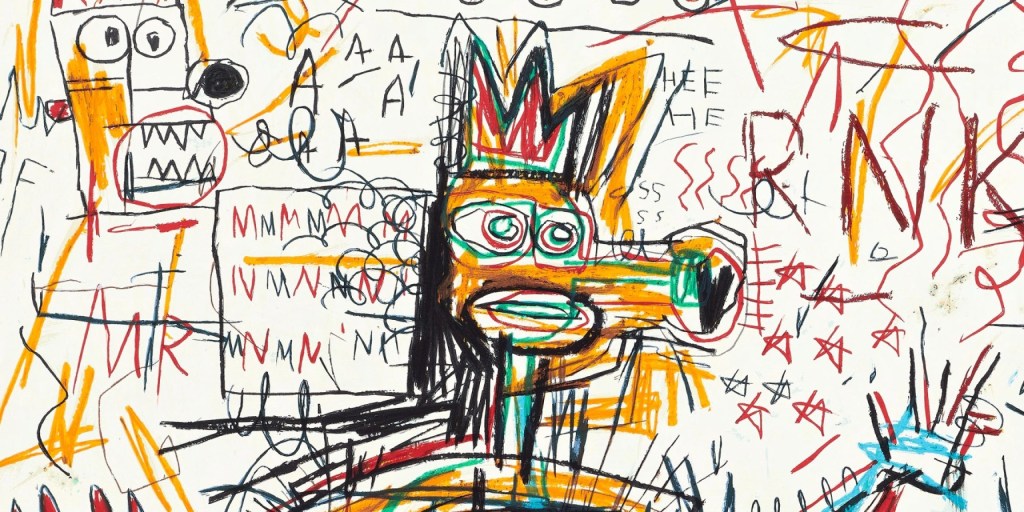
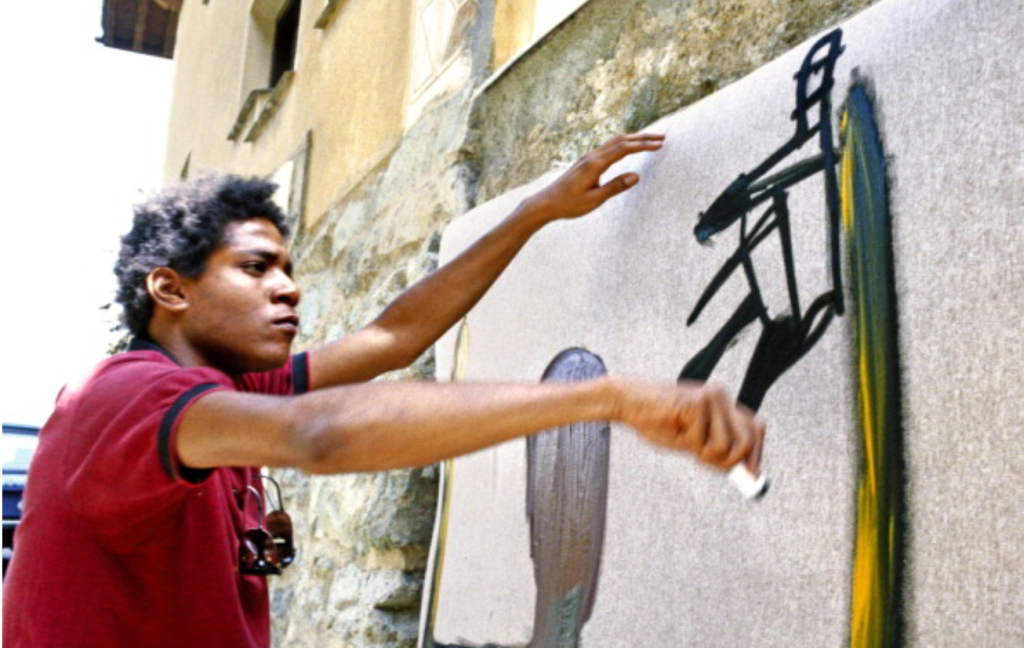
There are several common factors that are discussed when it comes to Jean-Michel and his unique art style.
Jean-Michel grew up culturally rich, with a Haitian father and a Puerto Rican mother, and spoke English, Spanish, and French frequently. His parents divorced when he was 7. He claimed physical abuse from his father but had fond memories of his mother, as she supported his art and his education. She famously enrolled him as a Junior Member of the Brooklyn Museum when he was six and gave him books like Gray’s Anatomy, which can later be seen as a major influence on some of his imagery. His parents’ divorce, getting in a car accident and having surgery at an early age, discrimination, and eventually his mother being put into a mental hospital for depression were major parts of his childhood, and the situation became untenable enough for him to choose to become homeless at 15—living in Washington Square Park—or couch-surfing where he could. He chose freedom and found his way to survive as a starving artist. He painted graffiti with Al Diaz around 1978 to 1980, and they produced the “SAMO” project, which was a big part of his break as an artist. It didn’t hurt that they would do their graffiti pieces near well-known art dealers and galleries in NY.


For some reason, it is rare to find any art critics speaking about his drug use in relation to his art. I personally believe that art and drugs were both coping mechanisms that became entangled. When one is entrenched in emotions and pain, an artist finds a way to express it and show their perspective on the world. With how Jean-Michel conducted himself, he denied societal rules and rules set by the art world. His drug use could also have propelled him to unlock his personal art style for several reasons. The substances he was using were generally stimulants or psychedelics, leading to increased performance in terms of artistic output. Also, from the intensity of his brush strokes, it was clear to me what he was feeling. Intensity is often mentioned in regard to Basquiat, but his intensity and his drug use were intrinsically entwined.
I would never state that Jean-Michel Basquiat was not talented in any way, but what I will venture to say is that he used drugs to explore his psyche, used them to express his art, and that this should be factored into the equation of his work.
Annina Nosei found him and decided to sponsor him as an artist. His living situation wasn’t very good, so she allowed him to live at her studio for a while he created his his first collection, until he sold every piece at his first show. Then he was able to graduate from starving artist to tortured genius: money flowing and the notoriety he apparently craved. He was a huge hit in the art scene and created new collections at record speeds.
He was reported to play his music incredibly loud in his studio and you could hear it in the gallery, disrupting business. But Annina allowed it. He would play loud rap music and have all his canvases laid out on the ground. Overcome by his stimulants (no doubt), he would work on multiple pieces at the same time, frantically running from one side of the studio to the next and even walking on his art. His shoe prints became a defining characteristic of identification.
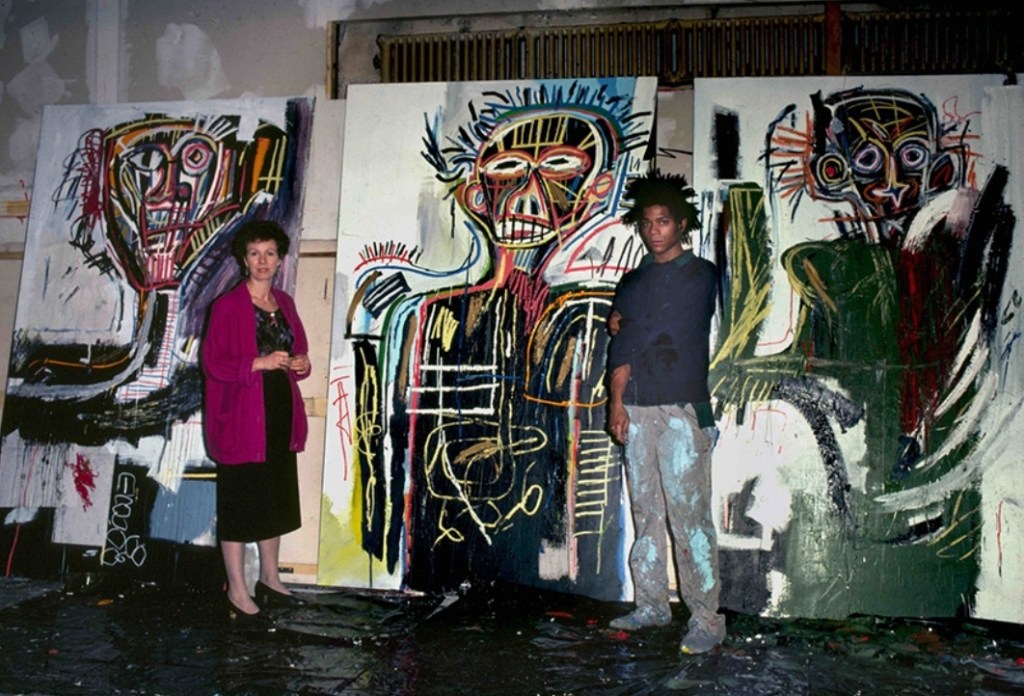

Now, I would say that there are some more realistic portraits that Jean-Michel created, with touches of his usual style. That could be a dichotomy between his sober mind and his drug-addled mind, in my opinion. Drugs in high doses over time can also create psychological ramifications like irritability, emotional instability, paranoia, dopamine burnout, and incorrect memories, and—as we know—a cycle of usage that’s unhealthy. It seems he became addicted to heroin, which led to his early demise, showcasing extreme manic energy. I wonder if there is any possibility of bipolar disorder, or if it was only drug-induced mental health issues.
Burning Out
Much has been written about the heroin-linked death of Jean-Michel Basquiat. But one voice was missing—that of the wildly talented, wildly extravagant painter himself. Anthony Haden-Guest interviewed America’s foremost black artist in the last stages of his blazing trail, as he careened between art dealers and drug dealers
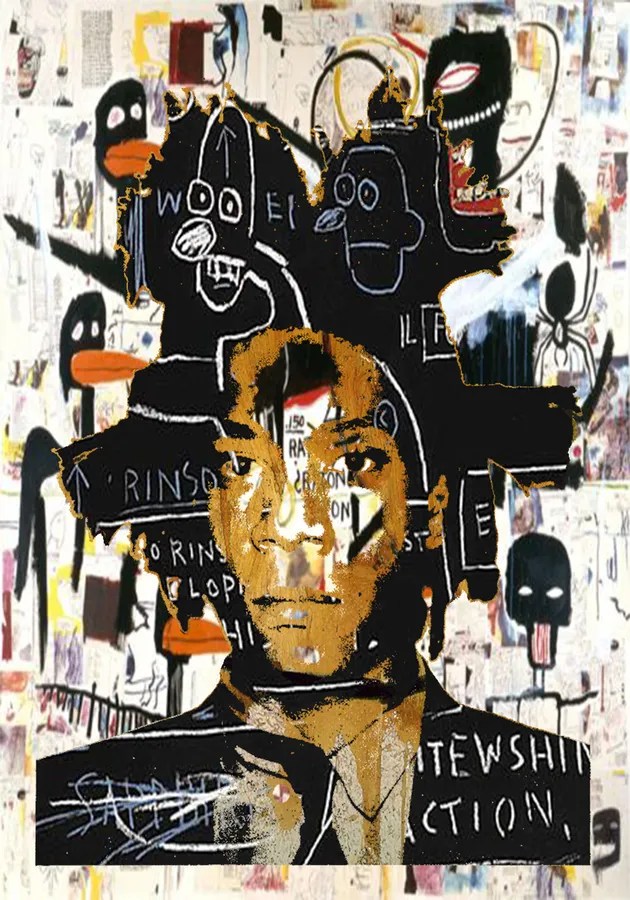
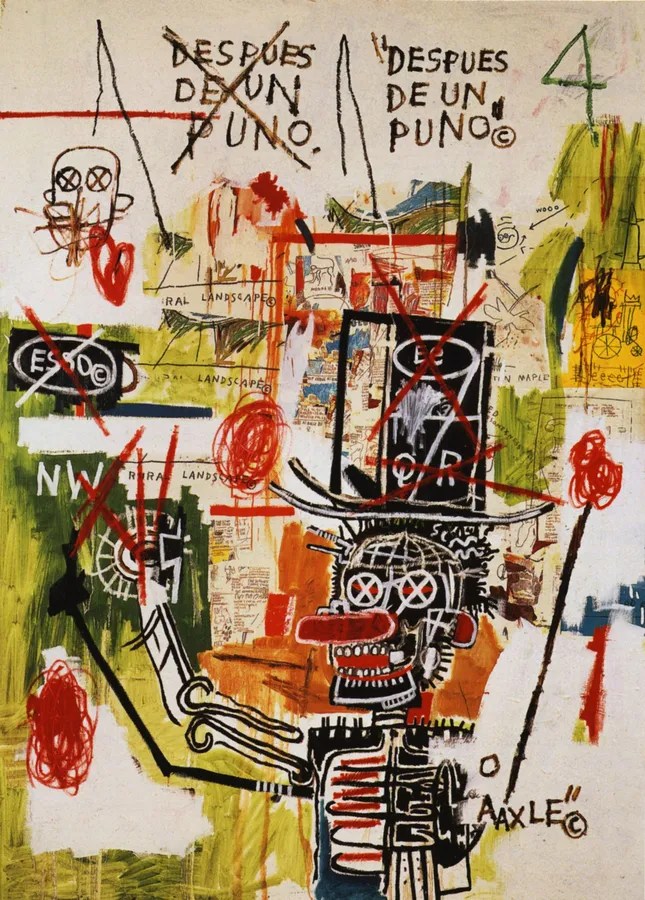
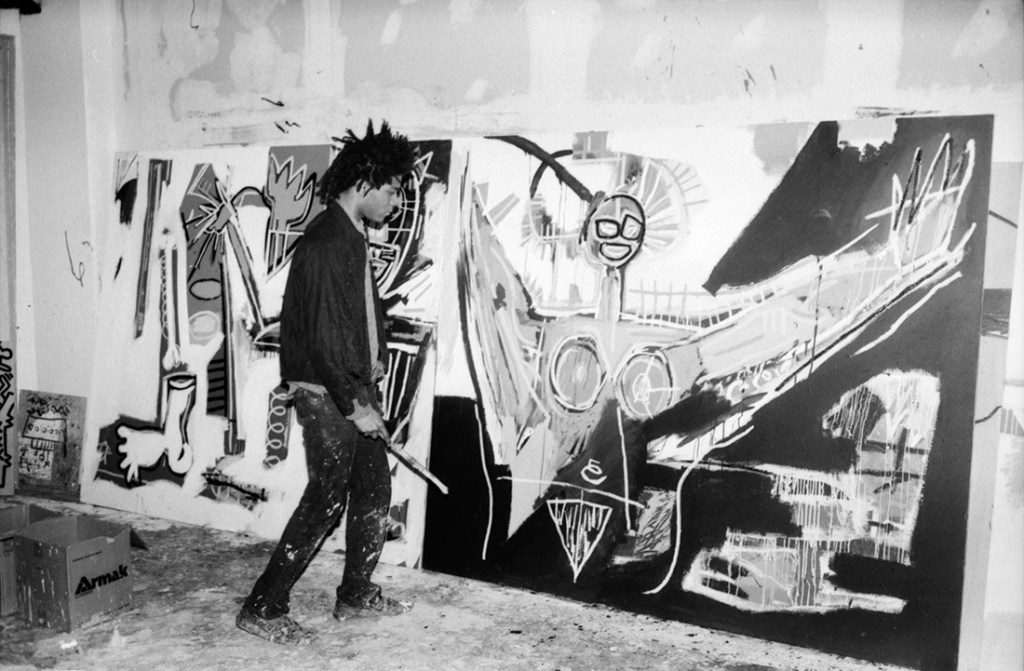
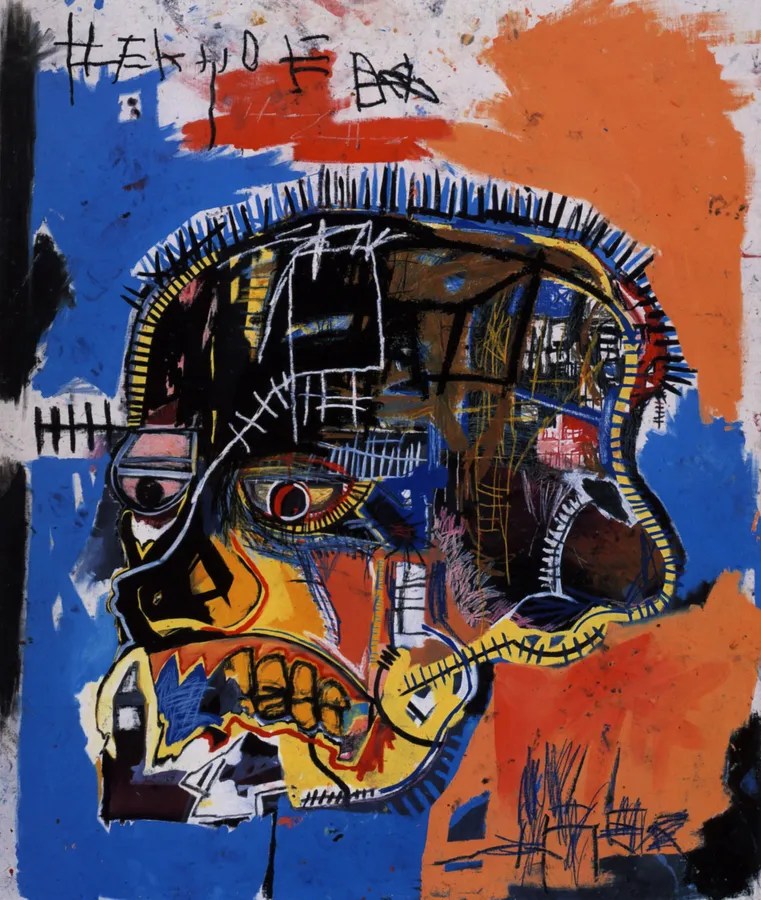
Andy Warhol, Jean-Michel Basquiat, and the Friendship That Defined the Art World in 1980s New York City

My theory is that Jean-Michel used stimulants to amass a huge body of work as quickly as he could, and I also think he used drugs to unlock his creativity in different ways. There are references to Basquiat exploring his sexuality, and my guess is that he also liked to explore his psyche. Beyond performance-enhancing stimulants being useful for manic creation, they likely supported his personal artistic expression as well. I understand how addictive it can become to feel your abilities unlocked and to feel yourself improving at your primary passion. You may even begin to believe that drugs allow you to act as a conduit, or that you are tapping into something beyond yourself. Nonetheless, you will always feel the breaking down of mental barriers that keep the sober mind captive. People have used chemicals and substances to “be better” in all avenues of life, and I don’t believe Jean-Michel died at the age of 27 from a drug overdose simply because he was using drugs to cope. My theory is that he was likely using them constantly—especially as his fame increased—as he felt pressure to maintain his level of performance while also partying with celebrities during the golden age of the 1980s club scene.

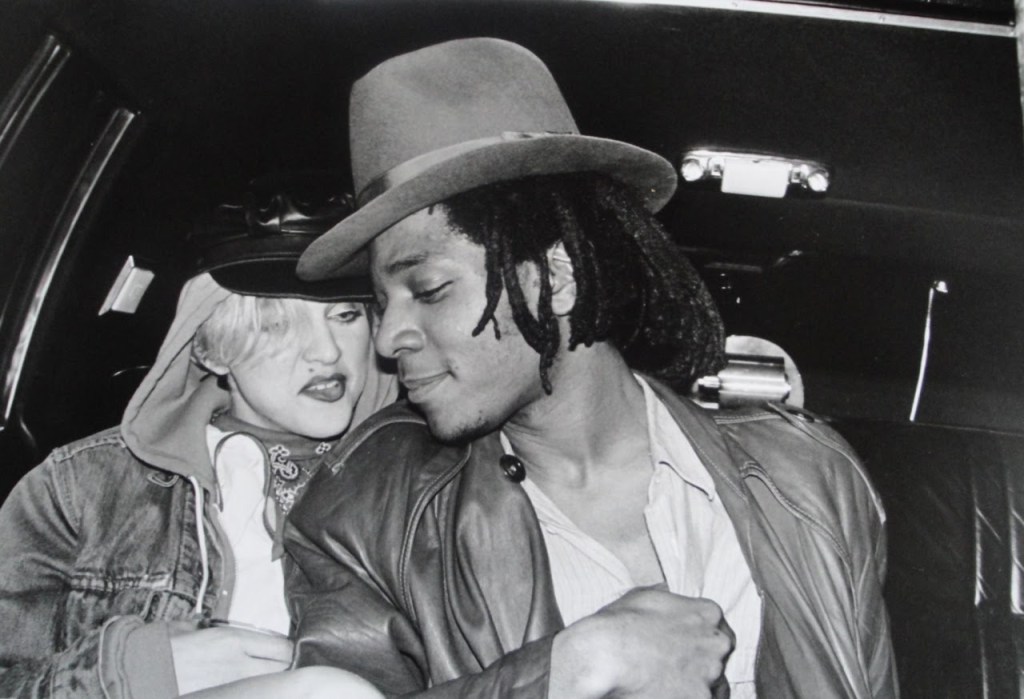
“I would often wake up in the middle of the night and find him not in the bed next to me, but up, intent on painting, at 4 a.m., his face an inch from the canvas, in a trance. I would stand in disbelief watching him get to work whenever something excited him.” – Madonna
He created over 600 paintings and 1,500 drawings and sculptures before his untimely death. That is from the consistent pursuit of something… Every artist does have something they want to say, and Basquiat felt he had a lot to say. He may have been part of the art scene, but my guess is that he felt a lot of resentment and disdain for the rules of the art world and chose his art as a way to express things people didn’t like to see. He is considered political simply by representing diversity, and wealth inequality, native cleansing, and maybe some of his pieces were like showing the world its own mirror. He intentionally expresses darker ideas and iconography—things and people that would be categorized as “ugly.” He got to express himself without guardrails, and he got to decide what to show us—he was in control, and maybe he had an interest in the ugly, dark, and chaotic parts of the world.
I don’t believe that an artist is “cheating” by using enhancements. If we didn’t have art and drugs combined, we wouldn’t have any Beatles albums. The entire 1970’s classic rock genre would not be as it is today. It doesn’t remove the talent from the artist, but its a failure to not discuss it as a major piece of the puzzle.
No matter how you feel about Basquiat’s modern art style I think It’s beautiful when art can make a viewer truly feel something.

 RD Studio
Leave a comment